Service
Ant Control
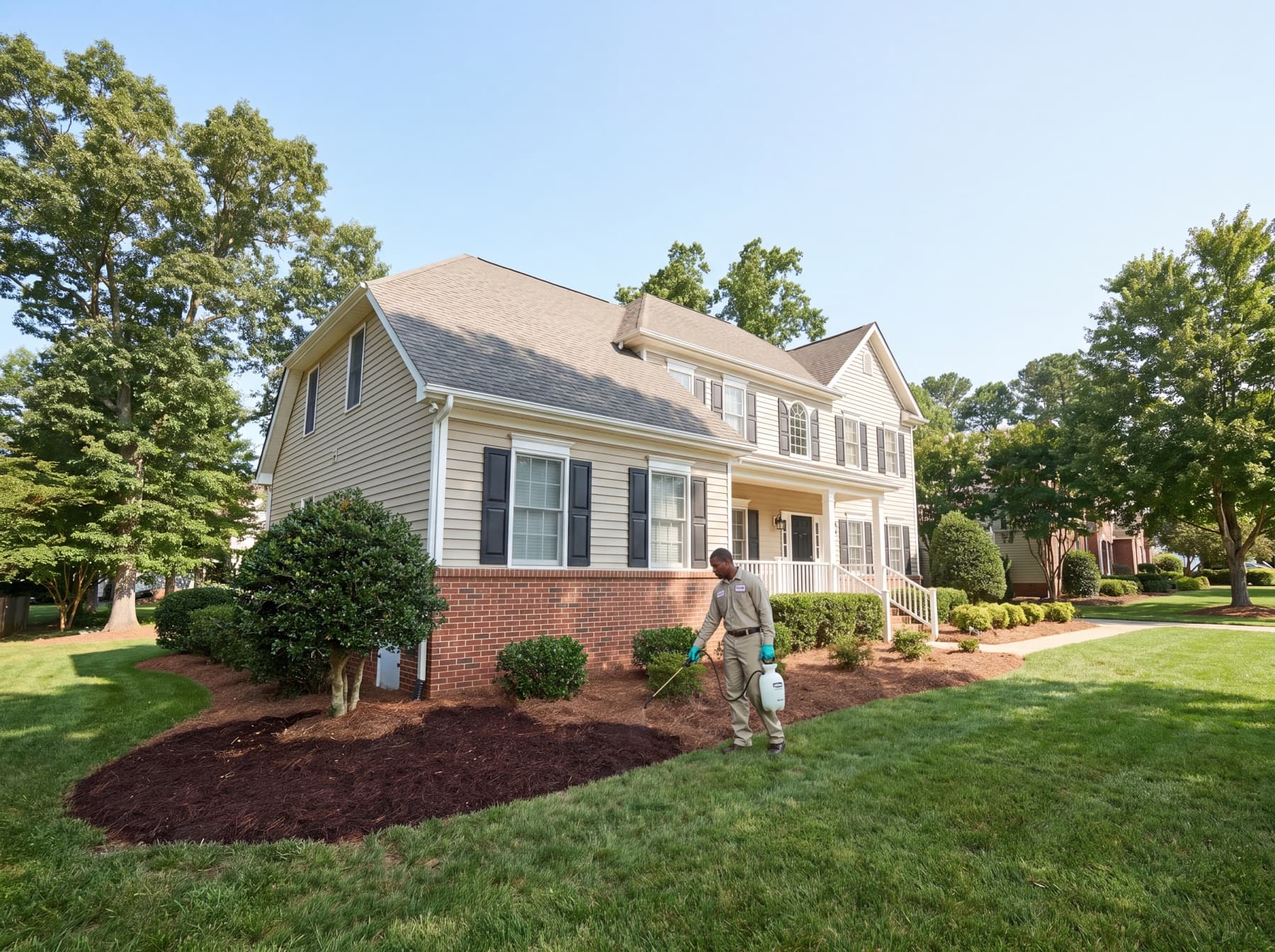
Ant treatment for the species that actually show up in Charlotte yards and kitchens — odorous house ants, carpenter ants, and fire ants — with colony-level treatment instead of surface spraying that just scatters the trail.
Ants are the single most common pest complaint in Charlotte homes, and it's not close — a line of them crossing the kitchen counter is usually what finally gets someone to call a professional rather than reach for another can of spray. The frustrating part is that the spray usually works, briefly, which is exactly why the problem keeps coming back.
How to Get Rid of Ants in the House
Store-bought sprays and DIY remedies — boric acid baits, diatomaceous earth, peppermint or tea tree oil — can knock down the ants you can actually see, but that's rarely the real problem. A visible trail is a small fraction of the colony; the nest itself, along with the queen, is usually somewhere you'll never spray: inside a wall void, under a slab, or out in the yard. Repellent sprays can even backfire with certain species, since some ants respond to a disturbed trail by splitting the colony into multiple smaller nests — turning one problem into several.
Professional ant treatment works differently because it starts with identification. Different species require different approaches — a carpenter ant problem (which signals possible wood damage) gets treated very differently than odorous house ants trailing in from an outdoor mulch bed. From there, treatment typically combines:
- Non-repellent insecticides applied along known trails and entry points, which ants can't detect and avoid, so they carry it back to the nest and spread it to the rest of the colony.
- Targeted baiting placed where ants are actually feeding, working on the same principle — worker ants carry bait back and it works through the colony over time rather than killing on contact.
- A perimeter treatment around the foundation to cut off new trails from establishing before they ever make it inside.
Most homeowners notice a real drop in activity within a few days, with full elimination typically taking one to two weeks as treatment spreads through the colony — slower than a spray's instant knockdown, but it's the difference between ants disappearing for good versus disappearing for a week.
Key takeaway
If a spray keeps the ants away for a few days and they come back in the same spot, that's not a sign you need a stronger spray — it's a sign the nest was never treated, just the trail.
Why Do You Have Ants in Your House?
Ants come inside looking for three things: food, water, and a way in. On the food side, sugary spills (juice, syrup, dropped fruit), pet food left out overnight, and even small amounts of grease or protein on countertops are enough to start a trail — ants communicate with pheromones, so a single scout that finds a food source can turn into a steady line within hours. Water matters just as much as food: a slow leak under a sink, condensation around a pipe, or a pet's water bowl can be the actual draw even when the kitchen counters are spotless.
Entry points tie it together. Charlotte's mix of older homes with settled foundations and newer construction with builder-grade sealing both offer plenty of small gaps — around window and door frames, where utility lines enter the house, along foundation vents, and through gaps in baseboard trim. None of these gaps need to be large; most ant species can use openings smaller than a dime.
A few species-specific patterns worth knowing:
- Odorous house ants (small, dark, and the most common ant complaint in the Charlotte area) are drawn heavily to sweets and tend to trail in after rain, when their outdoor nests flood.
- Carpenter ants are larger and hollow out wood to nest rather than eat it, which means their presence — especially near a bathroom, kitchen, or any spot with a history of moisture — can point to a wood moisture problem worth investigating alongside the ant treatment itself.
- Fire ants, more of an outdoor yard problem than an indoor one in this area, build visible mounds and require a different approach than indoor trailing ants.
How Much Does Ant Treatment Cost?
A standalone ant treatment typically runs in line with a general pest control visit — a single treatment is usually included in a standard quarterly plan rather than priced as a separate service, though a carpenter ant problem (which often calls for identifying and treating a specific nest location, sometimes alongside a moisture inspection) tends to cost more than a routine odorous house ant trail. Most companies will treat an active ant problem as part of the first visit on a new pest control plan at no extra charge, since keeping ants out is usually the reason people sign up in the first place.
Preventing Ants Between Visits
Treatment gets rid of an active problem, but a few habits make a real difference in how often ants find their way back in between visits:
- Wipe down counters and sweep floors after cooking, especially around stovetops and areas where sugary or greasy spills happen — even a small residue is enough to start a trail overnight.
- Store pantry staples in sealed containers rather than the bags and boxes they come in. Sugar, cereal, pet food, and flour are common indoor food sources once a trail gets established.
- Fix small leaks promptly. A dripping faucet or a sweating pipe under a sink is often a bigger draw than food, particularly during Charlotte's drier stretches when outdoor water sources dry up and ants move indoors looking for moisture.
- Trim vegetation and mulch back from the foundation. Mulch beds pressed right up against the house — common in a lot of Charlotte landscaping — give outdoor ant colonies an easy staging area just inches from an entry point.
- Seal obvious gaps around window frames, utility line penetrations, and foundation vents where you've seen ants entering before. This won't stop every ant on its own, but it removes the easiest paths in.
None of this replaces a proper treatment once ants are already established — pheromone trails don't just fade because the kitchen got cleaner — but it does meaningfully stretch the time between visits and makes any treatment that does happen more effective and longer-lasting.
Where We Offer Ant Control
What Homeowners Look For
A few things customers consistently tell us matter most.
Frequently Asked Questions
Ready to get this fixed?
Call now or request a free estimate — we'll get back to you fast.