Service
Rodent Control
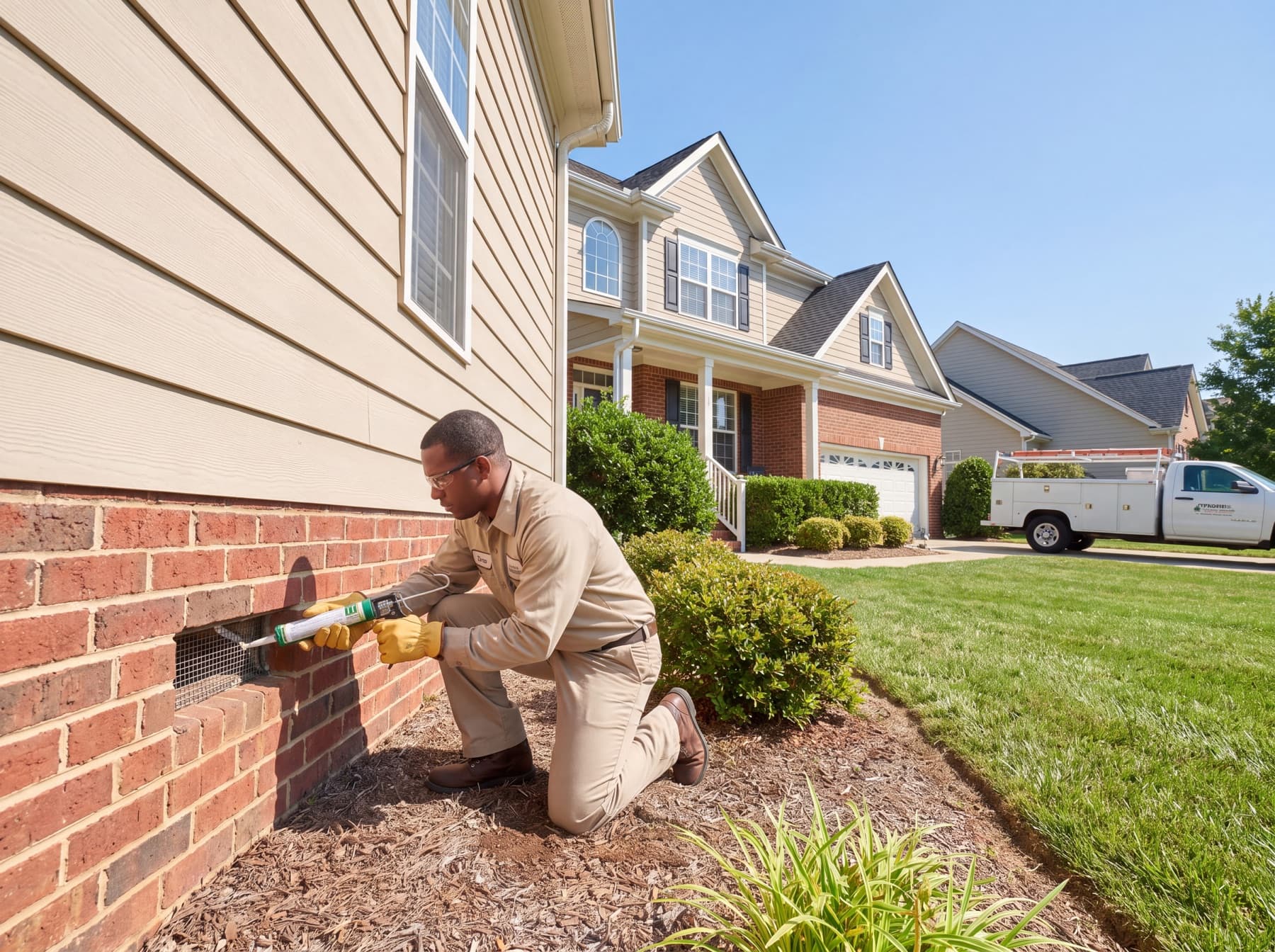
Rodent exclusion and removal for mice and rats getting into attics, crawlspaces, and wall voids. We trace the actual entry points first, seal them, and handle trapping and cleanup rather than just placing bait and hoping for the best.
Mice and rats don't care whether a Charlotte home is a 1920s bungalow near Dilworth with original crawlspace vents or a newer slab-built house out toward Ballantyne — both offer the same three things rodents are looking for: food, warmth, and a way inside. And because they're most active at night and prefer to stay hidden in walls and attics, most homeowners don't realize they have a problem until the signs are already unmistakable.
Signs You Have a Rodent Problem
Droppings are usually the first thing people notice. Mouse droppings are small and smooth with pointed ends, about 1/8 to 1/4 inch long, and turn up in kitchen cabinets, under sinks, along baseboards, or inside chewed cardboard boxes. Rat droppings are larger — shiny black and 1/2 to 3/4 inch long. Fresh droppings look dark and moist; older ones dry out, turn gray, and crumble when touched, which is a rough way to gauge how long the activity has been going on.
Other signs to watch for:
- Gnaw marks — rats leave marks about 1/8 inch long, while mice leave smaller, scratchier marks. Rodents will chew through cardboard, plastic, and even wiring behind walls to get at food or water, which is a real fire hazard, not just a nuisance.
- Scratching sounds, especially after dark. Rats tend to be heard higher up — attics, roof lines, ceiling voids — with more of a gnawing or scurrying sound, while mice are more often heard inside wall cavities and identified by higher-pitched squeaking.
- Dark smudge marks along baseboards and walls where rodents repeatedly travel the same path, left behind by dirt and oil on their fur.
- Nesting material — shredded paper, insulation, fabric, or packing material balled up in a hidden, undisturbed spot like the back of an attic or behind stored boxes.
How to Get Rid of Mice and Rats: DIY vs. Professional Rodent Control
Snap traps and store-bought bait stations can handle the occasional single mouse that wanders in, but they run into the same limitation for anything bigger: they don't reach rodents already nesting inside walls or attic insulation, and rats in particular are smart enough to learn to avoid a trap once they've seen it catch another rat. A few traps set around the kitchen might reduce what you're seeing without ever addressing the nest producing more of them.
Professional rodent control approaches the problem from two directions instead of one:
- Exclusion — finding and permanently sealing every gap a rodent could use to get in. This matters more than trapping alone, because mice can squeeze through an opening as small as a dime (about 1/4 inch), and rats need only a gap the size of a quarter (about 1/2 inch). Vents, utility line penetrations, gaps around the foundation, and warped soffits are the most common entry points on Charlotte homes.
- Targeted trapping and monitoring — placed based on an inspection of actual activity (droppings, gnaw marks, grease trails), not guesswork, followed by a check-back visit to confirm the problem is actually resolved rather than just quieter for a week.
Key takeaway
Trapping without sealing entry points is treating a symptom, not the cause — new rodents will keep finding the same opening the last ones used. A rodent job that doesn't include exclusion work is only a temporary fix.
How Much Does Rodent Control Cost in Charlotte?
Straightforward extermination using traps or bait — for mice or rats — typically runs $150 to $550. Full exclusion work, which is what actually stops the problem from coming back, costs more depending on scope:
- $25 to $75 per entry point when a company prices it piecemeal for a small, contained issue.
- $250 to $1,000 for a flat whole-home sealing job on a smaller house with limited access points.
- $600 to $1,500+ for a larger home with multiple entry points or attic activity.
- $500 to $3,000+ for a full-home seal on an older or larger home, where age and construction type (crawlspace foundations are more labor-intensive to seal than slab) push the price up.
A comprehensive plan — exclusion work plus a follow-up visit or two to confirm the seal is holding — typically lands in the $600 to $1,400 range for a standard single-family home, which is usually a better long-term value than repeated trapping-only visits that never address how the rodents got in to begin with.
How Often Should You Get Rodent Control?
Most Charlotte homes don't need standing rodent service the way they might benefit from quarterly general pest control — rodent work is typically project-based: an inspection, exclusion, and trapping to clear an active problem, followed by a warranty period rather than a recurring visit schedule. That said, homes with known vulnerabilities — an older crawlspace foundation, mature trees close to the roofline, or a history of past activity — sometimes add a rodent check to their regular quarterly pest visit as cheap insurance against a repeat problem.
Attic vs. Crawlspace: Different Entry Points, Different Fixes
Where rodents are getting in usually says a lot about the fix. Attic activity in Charlotte homes most often traces back to roofline gaps — warped fascia boards, gaps where a tree limb overhangs the roof, or a soffit vent with damaged screening — and mature tree canopy in neighborhoods like Myers Park and Elizabeth gives rats an easy path from branch to roofline that a ground-level inspection alone would miss. Crawlspace activity, more common on the area's older pier-and-beam homes, usually comes down to a foundation vent with torn or missing screening, a gap around a plumbing penetration, or a crawlspace door that doesn't seal tightly.
Because the entry points are so different, a thorough inspection has to check both areas specifically rather than assuming a fix in one spot solves the whole problem — a home can easily have separate rodent activity in the attic and the crawlspace at the same time, entering through two completely unrelated gaps.
Where We Offer Rodent Control
What Homeowners Look For
A few things customers consistently tell us matter most.
Frequently Asked Questions
Ready to get this fixed?
Call now or request a free estimate — we'll get back to you fast.